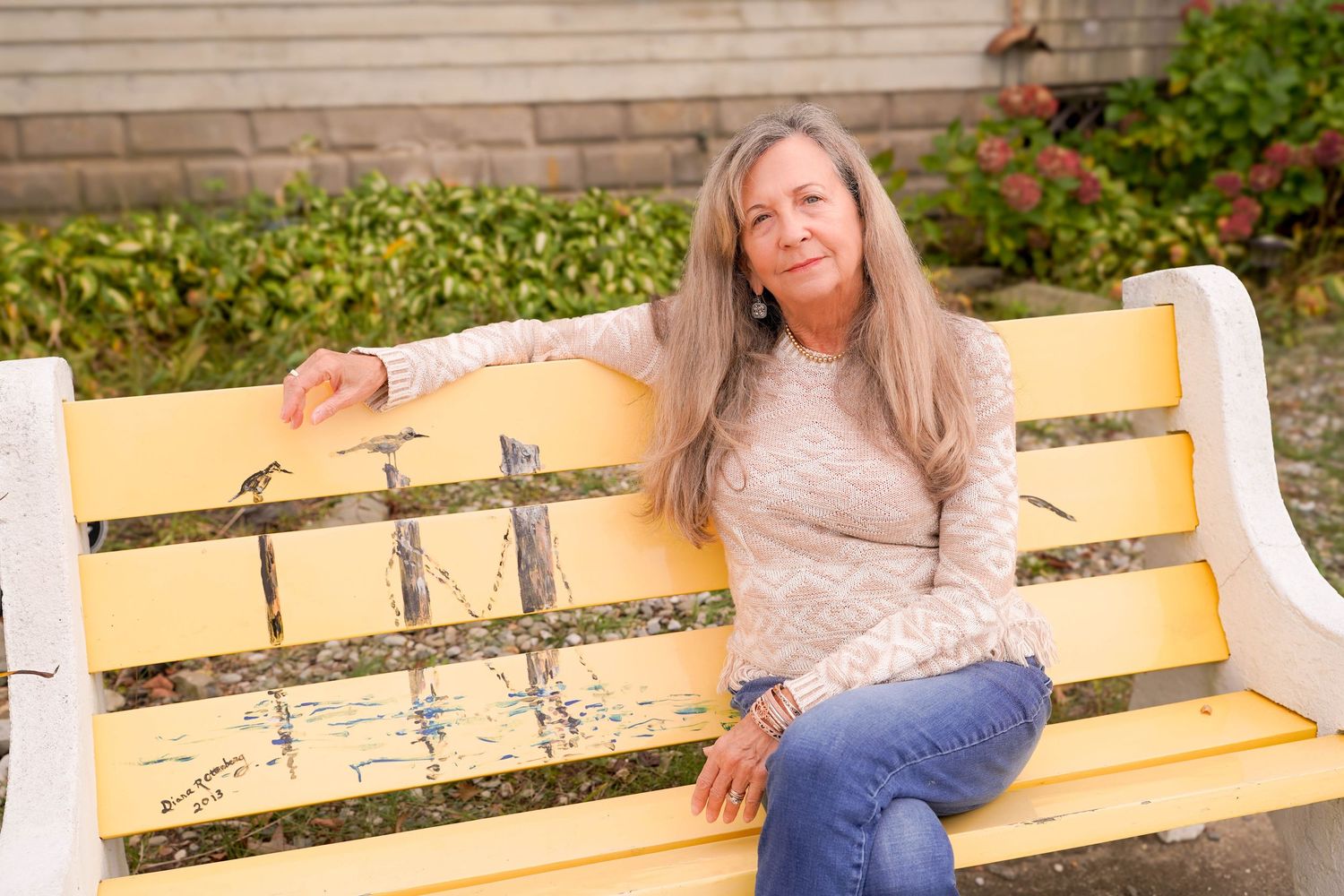
Woman. Daughter. Sister. Artist. Friend. Wife. Sculptor. Painter. Model Maker for Industrial Magic and Light.

Meet Our Next Feature: Randy
I was awake late one night cruising the interwebs, and I came across a profile with the user name "New American Art." I clicked on her profile and discovered there was a local woman in Ocean Gate who created beautiful art in the form of relics. I was fascinated. The art itself was unusual in a way, something beautiful and intricate, but very different. I knew immediately I wanted to reach out to this woman and interview her for my Women's History Month feature. Boy, was I in for a treat. It turned out her name was Randy, a fourth generation Gator. Her family had owned an original home in Ocean Gate for over 100 years. I couldn't have been more excited. Before I was a photographer, I was a history teacher. I love learning about the stories of the times before, especially in New Jersey, and especially where I live. This seemed like a dream so I reached out and messaged her on a whim. She sent me her website when she responded so that I could learn more about her, so I clicked on the about section and up popped a photograph of a sleek young woman working on the Death Star. The Death Star from Star Wars. As fate would have it, I unknowingly had stumbled upon the chance of a lifetime. Randy was employed at George Lucas's Industrial Light and Magic for over 25 years as a traditional model maker. She worked hands on for movies like E.T., Poltergeist, Star Wars, Indiana Jones, and on and on. She was the first woman to work in this section of the film industry, and created the magic for cult staples that we all grew up watching. I could not believe my eyes, or my luck.

Randy working on a Star Wars model.

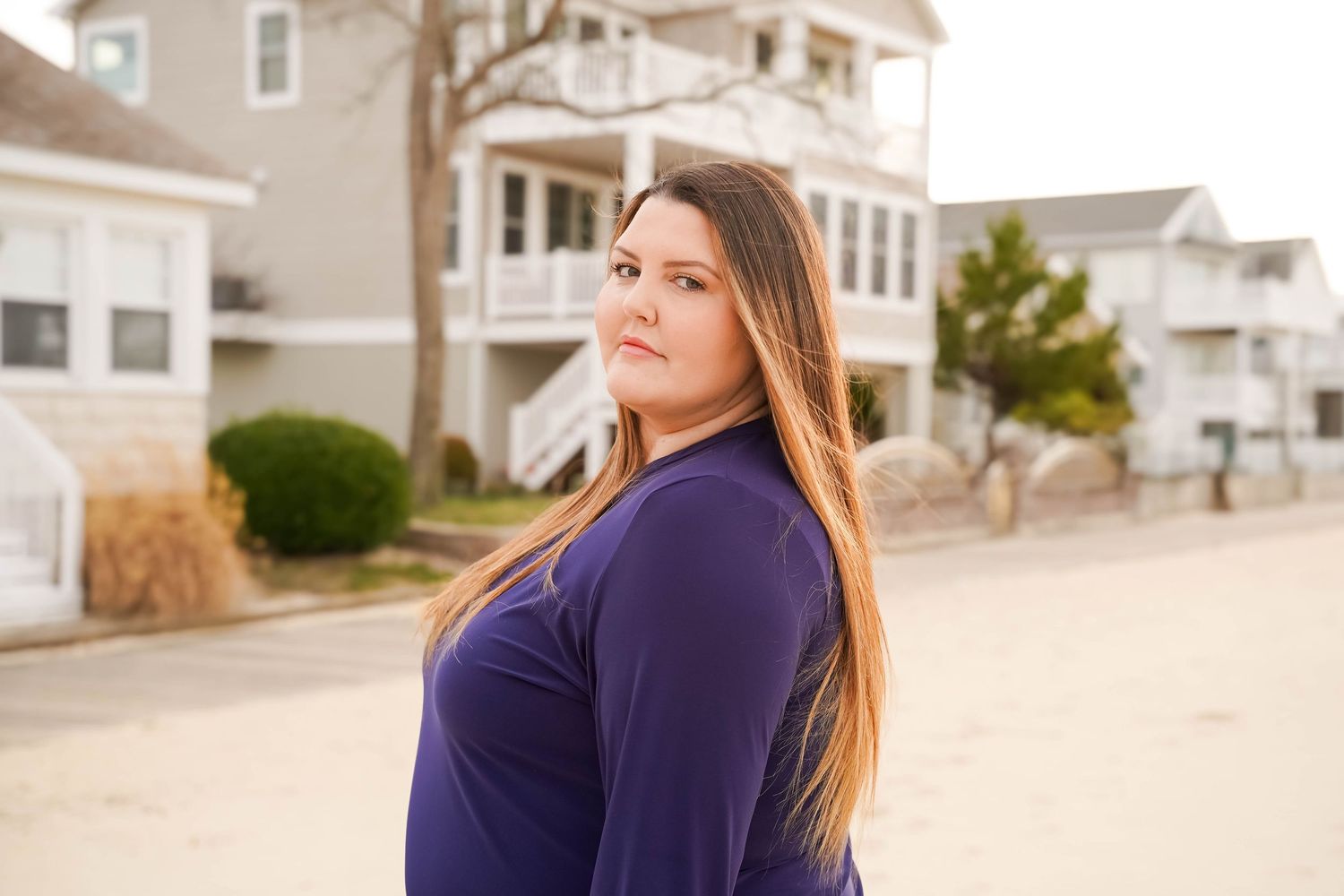
Randy at her family home in Ocean Gate.
Randy has spent every summer of her entire life coming to Ocean Gate. Her grandfather was an entrepreneur and was one of the founding members of the yacht club in town. Their generational family home sits right on the boardwalk and summers were spent swimming, sailing, making art, and in the sunshine. She looked forward to every June when her family would leave their primary residence in a little red brick row house in Philadelphia, and head to Ocean Gate. Randy isn't sure how exactly her grandfather found the little town, she thinks maybe an ad in a newspaper. In 1924 many people were looking to leave the cities due to the Spanish Flu, and head to the shore. Her grand father bought many properties up and down the street and Ocean Gate was very special to her family. Randy loved her summers here and looked forward to sailing all year. Her family had a boat and knew everyone in town. She was the baby of the family, and had more freedom to do the things that fueled her creative side. She was a born artist and always was encouraged to create and pursue projects. Her mother Diana was the original artist, and Randy always knew she wanted to be like her. She never pictured anything else for herself. Her mother was a fashion illustrator before she had her children. This was at a time when photographs weren't taken of the designs, they were all hand drawn. Her father was in the military and fought under General Paton during WW2 in Europe, so her mother ran the household. A matriarch was a constant in all of the years their family has held the Ocean Gate for over 100 years.
Even though she didn't look forward to going back to Philadelphia in the winter, she did have a lot of advantages there as a growing artist being exposed to an urban environment. She was exposed to different opportunities there that she wouldn't have had anywhere else, like taking art classes every Saturday. She took these classes starting at a very early age and it was a ritual for her for nearly a decade. Philadelphia also had a prestigious school system where she could fully express herself and immerse herself in her studies. Her high school there let the students pick a major and her major was in art. She had a teacher there that really fostered her art and pushed her to create and not just make crafts, but to make art that spoke to her.

Randy's Fine Art Tunnel of Love
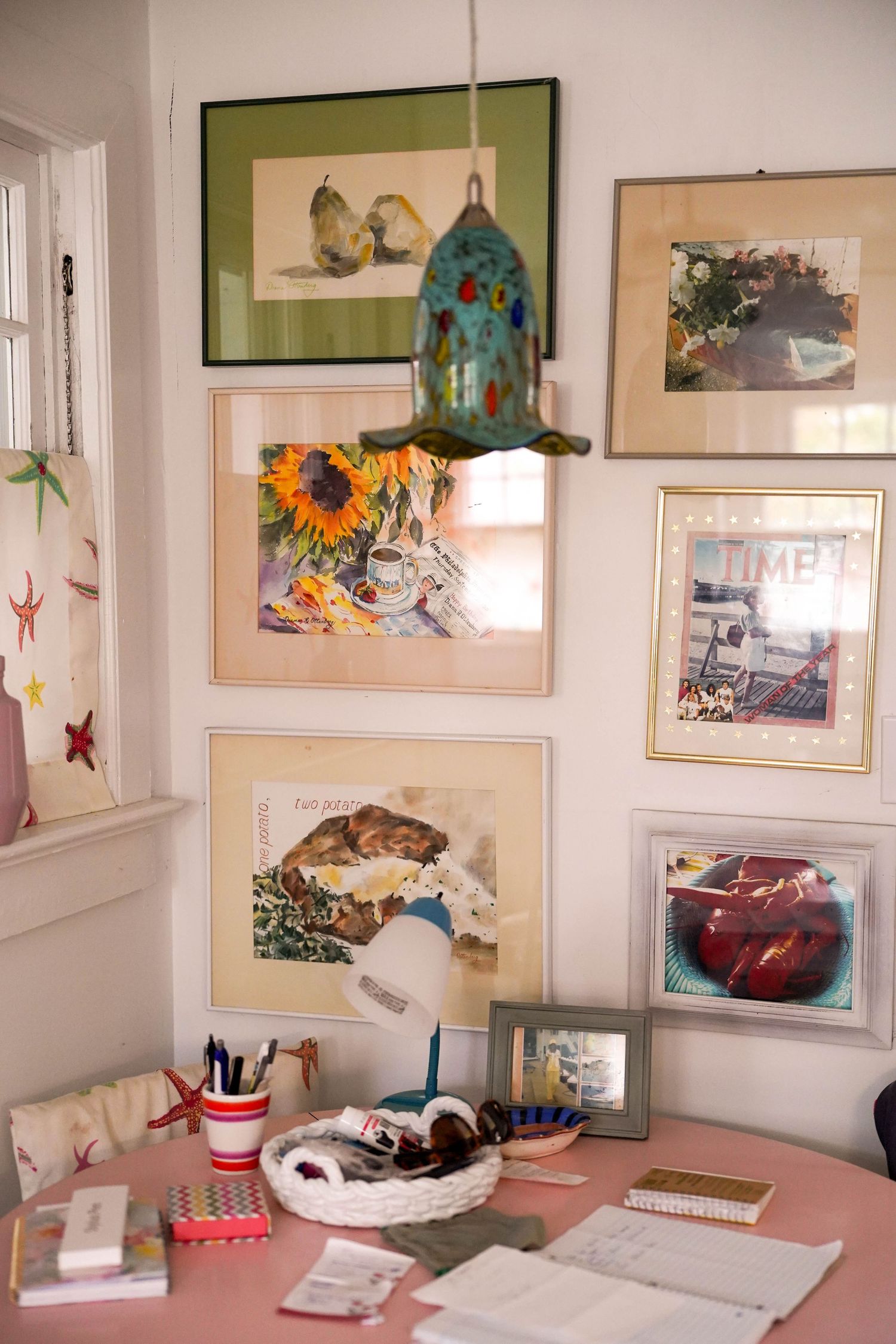
Kitchen at the Family Home
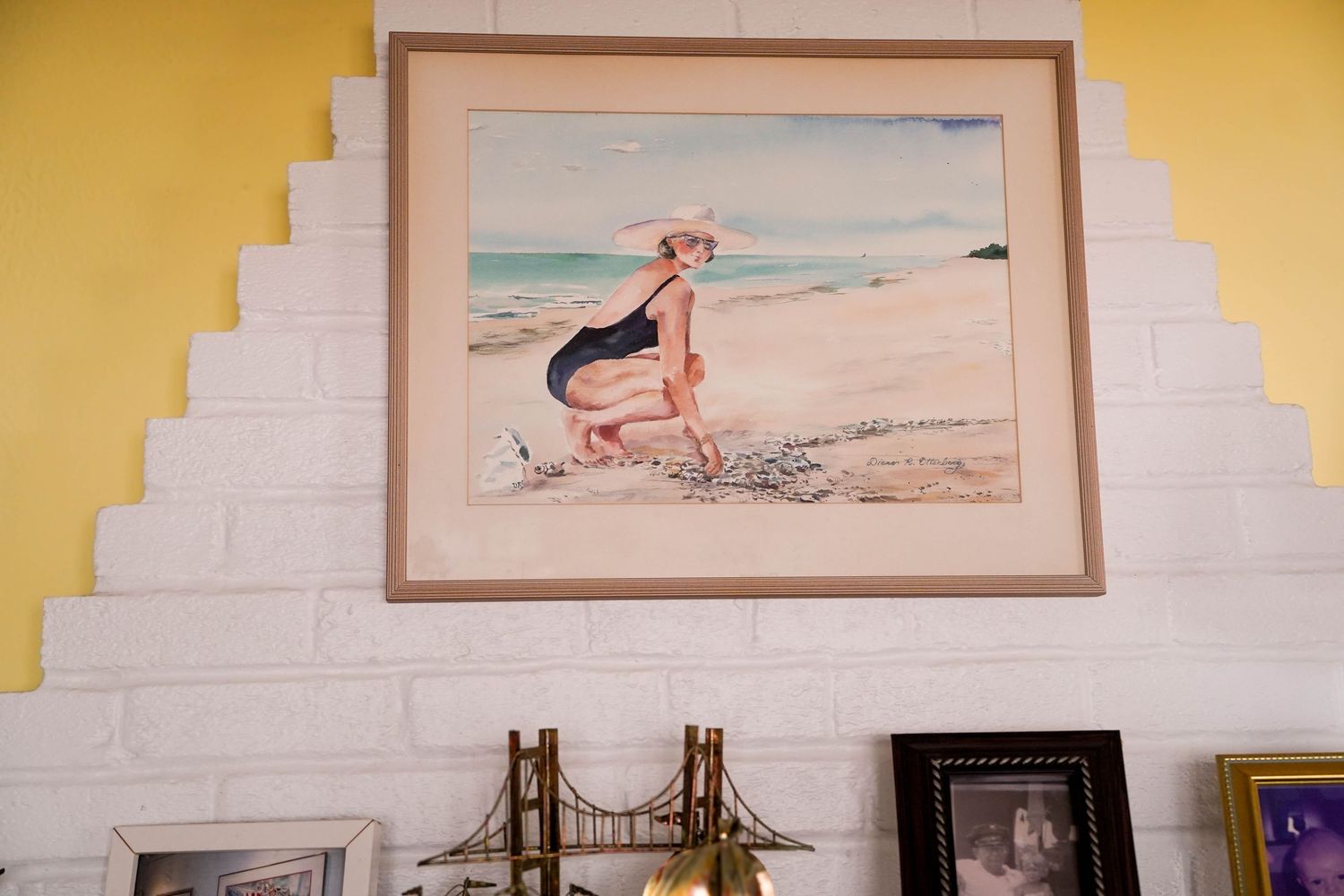
A painting by Randy's mother, Diana.
When Randy was 18 she graduated with her major in Art, and had already built a decent size portfolio. She worked hard and received a full scholarship to the Art and Design College in Minneapolis. She boarded her first ever plane on the East Coast in pursuit of her dreams and never looked back. She spent two years there, and was exposed to different art forms she had never seen before. She then had the opportunity to transfer to the San Fransisco Art Institute her third year, and she took it. Her mother told her if she went to California she would love it and would never want to come back. She planned her cross country trip, made it there, and knew her mother was right. San Fransisco in 1976 was magical and she loved it. She majored in painting and stayed there through graduate school. After she graduated she worked different jobs, like working for the city for the San Fransisco Art Commission, hanging art work. She stayed creating art in her studio and had a gigantic art portfolio.
Eventually Randy heard Lucas Films, owned by George Lucas, was moving to the area. The specific branch of the company she was interested in was Industrial Light and Magic, which was the special effects branch. This was right after the original Star Wars movie had come out, and the first Indiana Jones. He was moving his studio north of San Fransisco. Randy applied and called every single day for three months. She made sure she was available at the drop of a hat incase they decided to meet her, as this wasn't a time of texting and calls and everyone being available at the grasp of a fingertip. She didn't want to miss her chance. Through tenacity and timing, it worked out. They came to her studio and looked at her art. They told her they were looking to expand the model shop because they were getting more films in. She had never been a model maker before, but a lot of her work had three dimensional aspects to it. On October 13th, 1981, the entire course of her life was altered, she got the job.
Randy was the first woman model maker ever for the company. There were absolutely zero other women at this point in the model shop, which was already a very competitive industry to begin with. We are talking anywhere from 30 to 80 people creating these giant movies, vying for these coveted spots. Model making was just a small group apart of that. Randy's job was to make scale models. Taking giant landscapes and objects and scaling them down to a filmable size. She loved that part of her job, having a vision and making it come to life using abstract ideas and tools. The first film she ever worked on was Poltergeist. She made the tree that gets scooped up during the tornado scene in the pool. The first film credit she ever received was on E.T. the Extra Terrestrial, which was originally set to be called A Boy's Life. She had to be adaptable and creative, like using the tips of old paint brushes for the Californian dried golden grass, for example. She also worked on E.T.'s spaceship and the models of Elliot riding his bike in the air in the classic moon scene. At the time during creation, she had no idea how pivotal the movie would be. She recalled watching it in full after and being absolutely blown away by it. This was only the beginning of her remarkable career. She worked on so many cult classics during the years that followed like Indian Jones, Star Wars, The Gremlins, The Goonies, and many more. The list goes on and on spanning decades. She also did not just create the models, she was apart of filming with them. The day after filming she would have to view dailies, which would also be viewed by George Lucas. She recalls him being very quiet and shy.

Randy working on the ship for The Goonies.

A painting Diana made of Randy.

Family photographs in their home.
Randy also made sure to join a union to ensure decent rates and overtime. Like stated earlier, these were coveted positions, but that didn't mean anyone should work for less than they deserved, or accept payment that was less just to be apart of it. She eventually became a journeyman, which in a union means someone who has fully mastered their craft. It takes skill, time, experience and expertise to earn that title and there were absolutely zero women at the time who could call themselves journeyman. Creating the models and filming with them meant a lot of overtime. Randy made sure her rights, and everyone else's rights in the union were protected and that protocols that offered protection were followed. Labor laws were crucial to making sure that everyone was treated fairly. This was a sought after business and competitive to begin with. As a woman, it was especially competitive. Randy came from a family of hard workers and followed that legacy. She said the best advice she ever received was to check her ego at the door. Show up early to be on time. She was young and could have compromised labor laws, or her femininity, or self worth but she didn't. She made sure no one in her union did either.
The model making part of her life for Industrial Magic and Light spanned three decades. The model making industry in itself came to a halt with the inception and boom of technology. Randy recalls seeing a creation of Pixar for the first time, and knowing eventually it would replace model making. Computers and technology had the ability to generate landscapes and scale in a way that would make the model making industry mute. They could digitally replicate what had been hand created for a fraction of the cost and time. Everyone knew it was coming. George Lucas created a computer division, but there was a political aspect to who would be in that division. Model makers weren't computer people, but computer people also weren't model makers. Even thought that they had previously created with their hands would be created with computers, there was still the skill required of knowing how things needed to look and be put together artistically and creatively. There was also an aspect of being signed on for over a year, when previously the model makers had been contracted by project. Randy didn't go the computer route and left ILM after a long successful, revolutionary career.
As a woman, Randy thought about a family and marriage, but never anxious to do it right away. If it happened it happened, but it needed to be right. She did date, and experienced many heart breaks, which she processed through her art. During her time at ILM, she was still painting and creating her own art. Her studio in San Fransisco was covered in years and years of her art, walls of broken hearts. She was an independent single woman, paying her won way, navigating work and love and life on her own. She created an art series called Tunnel of Love, the namesake of the soundtrack of her life by Bruce Springsteen. She felt like she was going through the tunnel and didn't know how she would come out on the other side. She was always listening to Bruce in her studio while she was painting. She used a lot of the imagery he created to fuel her art. Randy doesn't really believe in living in regret, but one of the only regrets she has in her entire life is when she was younger in the Ocean Gate house, and hearing that Bruce was playing in Asbury and not going. Her and her friends still talk about it to this day. Randy eventually did find her love, organically at the gym. She was married for the first and only time at 43, and they live together in their home in California today.

Randy looks back on her life fondly. Industrial Light and Magic still has reunions, they just recently had their 45 year reunion two weeks before this interview. They were devoted to their jobs and loved their craft. She can't pick a favorite project she worked on, but she had a fantastic time working on Indiana Jones and said Harrison Ford in person was very easy on the eyes. She also really enjoyed working on Theed's City in Star Wars, where she scaled beautiful intricate buildings that were covered in florals. The last project she worked on was with Diane Disney, creating a model Disneyland museum, which is still there. This was sentimental for her and she recalls her being a very genuine kind person. She also loved the people she worked with, not just the movies she worked on.
Randy still comes to Ocean Gate every year from the West Coast. Their family home is one of the originals here and is a labor of love to take care of, but she wouldn't have it any other way. Up until 2019, her mother Diana was still commuting from Philadelphia at 96 years old to spend her summers in Ocean Gate taking care of their home that has spanned generations. Her mother sadly passed away, but her art covers their family home. When Randy let me tour their home, you could feel pieces of her mother everywhere in photographs and paintings. You can tell her mother appreciated and coveted Ocean Gate, and her family. Her art makes you feel, not just see, just like Randy's does as well. Pieces of their family are still all over Ocean Gate. Her mother painted some of the iconic benches we have on the boardwalk with her art. Randy says these benches make her feel more at home than anywhere in the world. Some of Randy's paintings are hanging up at Rosie's. She drove them back here in a 1957 Chevy. I like to picture that scene. These paintings that were created in Minnesota, traveling with her to San Fransisco for decades, and then saddled up in her car en route to our little gem of a town here in New Jersey. She was probably listening to Bruce Springsteen on the drive.
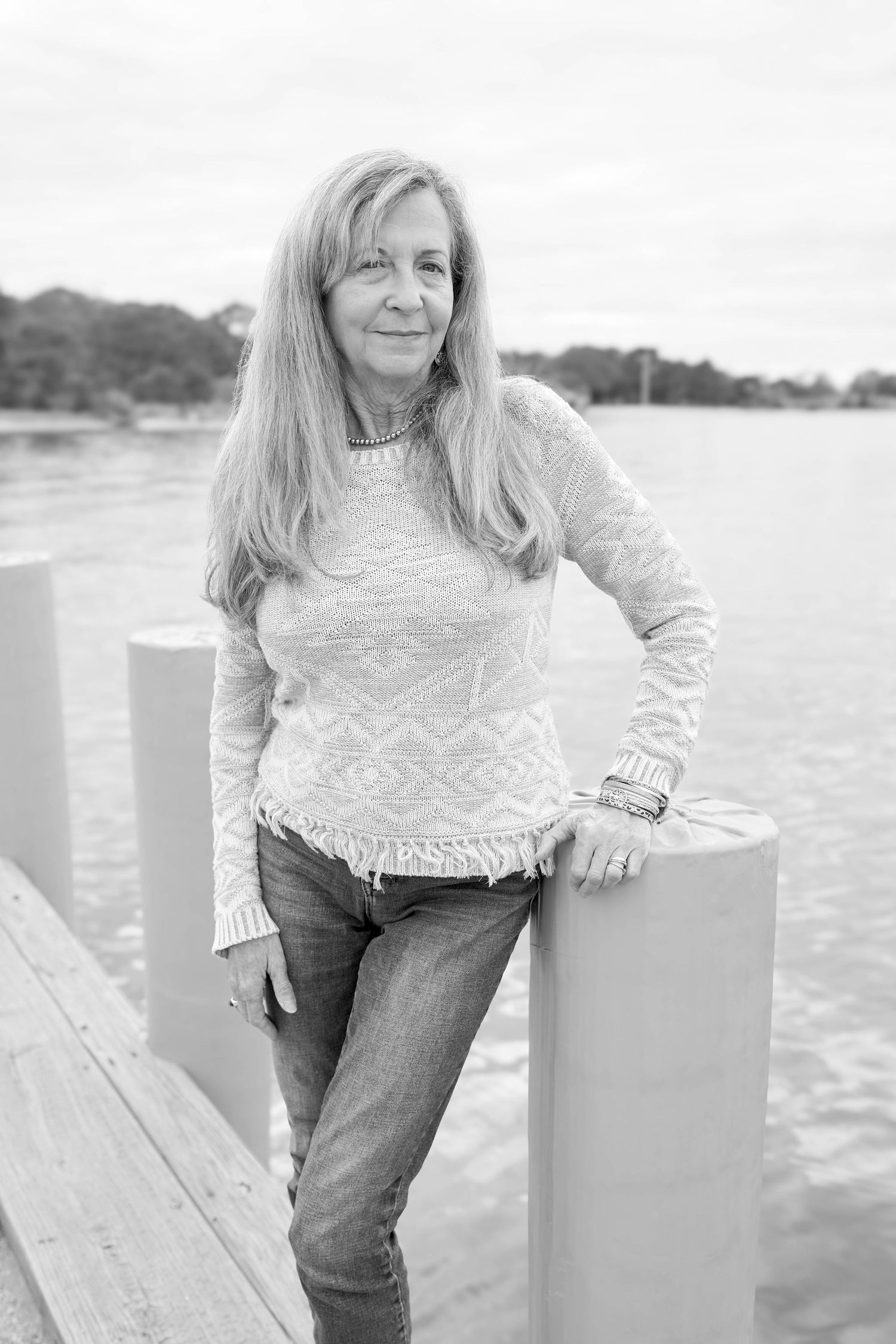
The Interview
What are you passionate about?
I am passionate about making art and my families original Ocean Gate home.
What accomplishments are you proud of?
I am most proud of consistently making and creating art from a young age. I created a large body of work in my own style. I am also incredibly proud
of the work I did for thirty years at Industrial Light and Magic.
What are the greatest challenges you have faced?
The greatest challenge I had was working for thirty years at Industrial Light and Magic in a previously "Boys Only" shop in the film business.

Painting by Diana.
Looking back on your life, what are one or two events that were monumental and changed your life?
Going to college in Minneapolis. I attended the Minneapolis College of Art and Design. I then moved to San Francisco and graduated with an MFA in painting from San Francisco Art Institute. I was then hired at ILM in 1981, and that changed the entire course of my life.
What does the word feminism mean to you?
Feminism to me means equal pay for equal work, not having to compromise my femininity, and equal job opportunities.
Who has been the most influential woman in your life?
My mom, Diana Ottenberg, who was a single mom, artist, and my biggest fan that loved me unconditionally. Another big influence in my life was Bruce Springsteen. He created a soundtrack of my life, providing imagery and inspiration for my work.

A photograph of Diana with her art on the beach.
What do you wish you knew when you were younger?
I never thought much about it... early loves and heartbreaks usually don't matter, but make good subject matter for making art.
What message do you want to send the next generation of women?
Follow your creative path. Trust your intuition. Live your life honestly. Stay away from bullies of any kind.
Why is Women’s History Month important to you?
Every month should celebrate Women's History, but it is important that it is recognized. It is equally as important to also honor the history of different diverse groups, especially in the current political climate.
How can women empower themselves and others?
Women can empower others by knowing that as a woman you can do WHATEVER you set out to do. Also, we do not have to be negative, to ourselves or others.

Thank You For Reading!
Thank you for reading and stay tuned for the next feature! Make sure to check out Randy's website and social media linked below!
Website: www.randyottenberg.com
Instagram: @randyottenbergart
Facebook: Newamericanart